31 Compact logo31 COMPACTUser manual
Open application ↗Complete manual

Web + native POS

Payments & credit

Record how the customer actually paid. Recording Card or Bank Transfer in Compact does not itself charge a customer or transfer money.

In this moduleUnderstand the workflowField referenceComplete a cash saleRecord card or multiple paymentsMake a credit saleReconcile a mixed paymentRecover an interrupted checkoutPractical exampleCommon questions

Understand the workflow

A payment record describes money actually received or paid. Sale total, amount tendered, recorded payment, change and due are related but distinct. Non-cash money should not be counted as cash in the drawer. Card recording does not automatically process a bank transaction; confirm success on the actual payment terminal/channel before recording it.

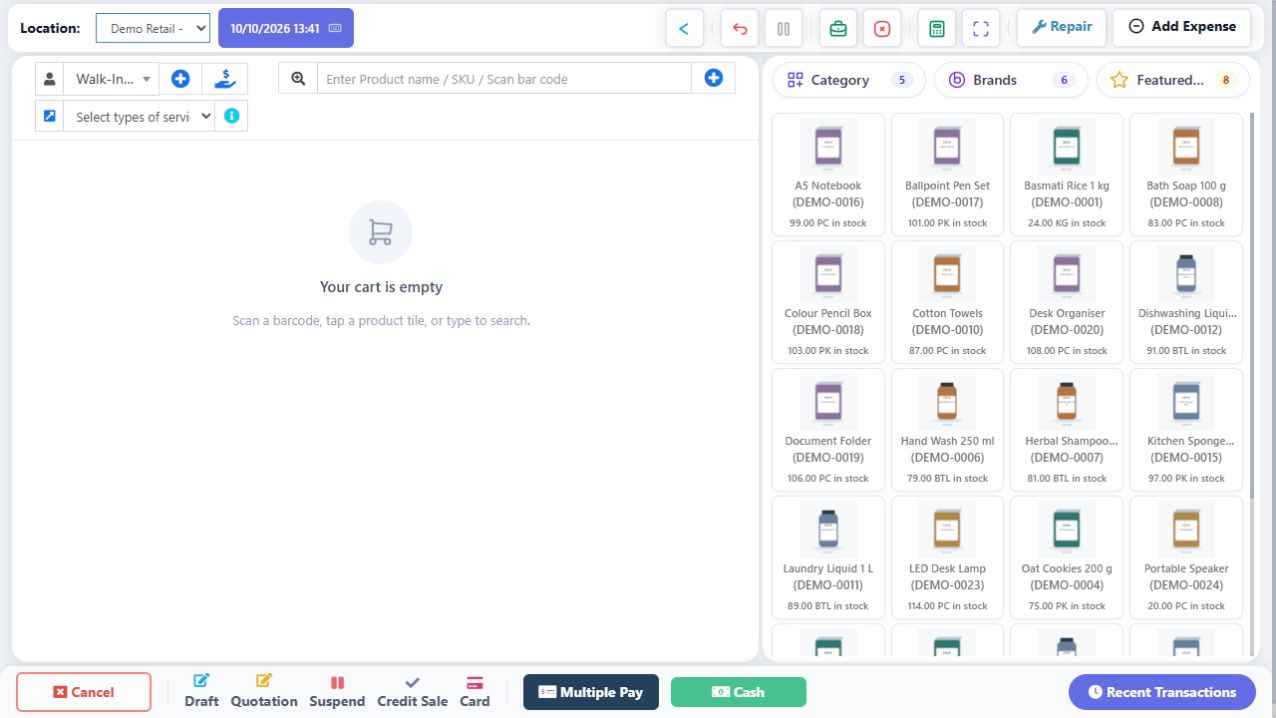
Payments & credit — module overview
SCREEN GUIDE Payments & credit — module overview. Select the screenshot to enlarge; optional fields may differ in your business.

Field reference

Use this while completing the form. A required field is marked with *; conditional fields appear only when enabled.

Field / controlWhat to enter or understand
Amount / TenderedAmount for this payment and cash handed over where offered. Use the screen’s actual meaning.
Change / DueCash to return versus remaining unpaid balance. A paid total and excess tendered cash are not extra sales.
MethodCash/card/UPI/custom method configured for the outlet. Use readable custom labels where available.
Payment accountWhere recorded funds belong. A method and an accounting/payment account are different.
Reference / card details / noteTransaction reference needed for reconciliation. Do not store unnecessary sensitive card credentials.
Multiple-pay rowsSeparate real payments whose sum must reconcile to the bill and remaining due.
Credit confirmationExplicit unpaid sale with a selected customer and allowed credit conditions.

PROCEDURE 01

Complete a cash sale

Where to go POS → Cash

Before you start
Confirm the cart and amount payable.

Steps

  1. Choose Cash. Review customer, total and cash payment amount in the confirmation screen.
  2. Enter tendered/received cash where offered and check change due. Count the money and return change.
  3. Confirm Complete sale once. Wait for confirmation and note the invoice number.
  4. Print or preview the receipt. Check Recent Transactions if confirmation is unclear before attempting another sale.

Check the result
The sale, stock movement and cash-register receipt are recorded.

PROCEDURE 02

Record card or multiple payments

Where to go POS → Card / Multiple Pay

Before you start
Confirm external card/UPI/bank payment separately when applicable.

Steps

  1. Choose Card for a single card payment, or Multiple Pay for a bill paid by more than one method.
  2. Enter each actual payment amount and method. Add relevant card/reference/account information where offered.
  3. Check that the amounts cover the intended bill total and that cash change is correct. Review any remaining due.
  4. Confirm once and inspect the invoice payment breakdown. Keep the external payment receipt/reference if your shop requires it.

Check the result
The invoice shows the correct payment methods and amounts.

PROCEDURE 03

Make a credit sale

Where to go POS → Credit Sale

Before you start
Select a named customer and confirm credit is allowed for that account and your role.

Steps

  1. Select the customer, add products and review the bill. Check available credit/terms shown by the system.
  2. Choose Credit Sale and review the unpaid balance. Confirm only with the manager’s permitted credit rules.
  3. Give the customer the invoice. Find the outstanding amount in their ledger and relevant due reports.
  4. When payment arrives, record payment against the existing invoice/contact; do not create another product sale.

Check the result
The invoice remains due until its payments cover the balance.

PROCEDURE 04

Reconcile a mixed payment

Where to go POS → Multiple Pay

Before you start
Know the amounts actually paid by each method.

Steps

  1. Review the bill total. Add a row for the cash portion and another for the confirmed non-cash portion.
  2. Select the correct method and account/reference on each row. Remove an accidental extra payment row before saving.
  3. Compare the row sum to the bill total and the displayed balance/change. Do not mark a partial payment fully paid.
  4. Submit once and wait for acceptance. Inspect payment history on the resulting invoice.
  5. At register review, compare only the cash portion to drawer cash; reconcile non-cash amounts to their own statements.

Check the result
Each received amount is allocated to its real method.

PROCEDURE 05

Recover an interrupted checkout

Where to go POS → pending confirmation / Previous bills

Before you start
Keep the basket/reference and do not ask the customer to pay again without checking.

Steps

  1. Read the failure carefully: server rejection is different from not knowing whether the server accepted the sale.
  2. For uncertain confirmation, use the offered Retry confirmation on the same operation, then inspect Previous bills by date/customer/amount.
  3. If the invoice exists, view its payments and print that existing invoice. Do not submit a fresh duplicate basket.
  4. If the server rejected it, correct the stated stock/permission/credit/register problem before retrying the intended saved work.
  5. If still uncertain, provide support with the local reference/time and preserve the app’s pending record.

Check the result
The operation is resolved without duplicating the sale or payment.

IN PRACTICE

A practical example

A total of 300 paid as 100 cash and 200 UPI increases recorded cash by 100, not 300. For an all-cash total of 300 with 500 tendered, the customer should receive 200 change, and net sale cash is 300.

Common questions

Does selecting Card charge the card?

The recorded payment method is not proof of bank/terminal approval. Use the actual configured terminal/payment channel.

Can an anonymous Walk-In customer buy on credit?

Use a verified named customer and the business’s permitted credit workflow; server policy can reject it.